
By the MJC design team, Orlando. Updated November 2026.
Short answer: Shaker doors have a flat center panel inside a simple frame and fit almost any home. Flat-panel, or slab, doors have no frame, so they look modern and wipe clean fastest. Raised-panel doors have a shaped center that looks traditional and formal. In Orlando, Shaker suits most homes and slab suits contemporary builds.
What is the difference between Shaker, flat-panel and raised-panel doors?
All three styles describe the front of the door, not the cabinet box behind it.
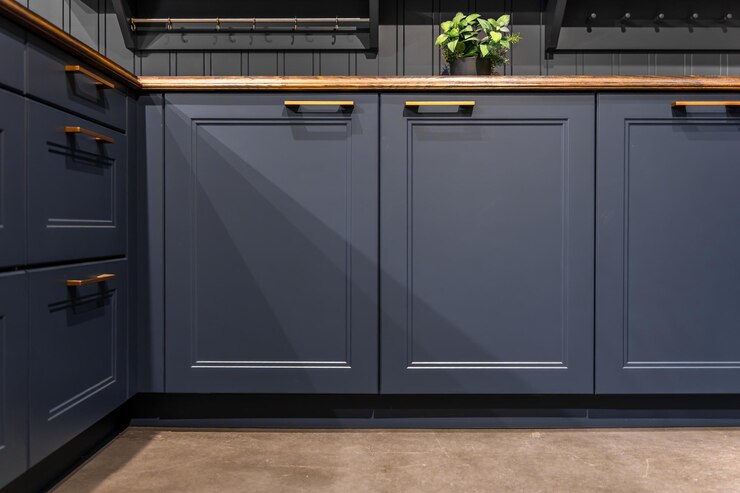
- Shaker doors have a flat center panel surrounded by a square frame of four pieces, two rails and two stiles. The frame has no decoration, just clean right angles. The style comes from the furniture of the Shaker communities and has stayed in kitchens for generations.
- Flat-panel doors, also called slab doors, are one flat piece with no frame and no profile. The look depends entirely on the finish: matte paint, high gloss, wood veneer or a textured laminate.
- Raised-panel doors have a center panel that is shaped so its middle sits higher than its edges, set inside a frame that often has a decorative edge. The result reads traditional and formal.
There are variations of each. A slim Shaker uses a narrower frame for a lighter, more modern look. A recessed-panel door with a small decorative edge sits between Shaker and raised panel. But most kitchens land in one of the three families.

How do the three door styles compare?
| Style | Look | Cleaning | How it ages | Fits these homes |
|---|---|---|---|---|
| Shaker | Simple, balanced, works in classic and modern rooms | Easy, but the inside corner of the frame collects dust and grease | Has stayed in style for decades, and repaints well | Almost any home, from 1990s builder homes to new construction |
| Flat-panel (slab) | Clean and contemporary, all about the finish | The easiest to wipe, with no edges or grooves | Depends on the finish: matte and wood grain age well, high gloss shows scratches and fingerprints | Contemporary builds, condos and modern remodels |
| Raised-panel | Traditional and formal, with more shadow and detail | The most profile edges to clean | Can look dated in some finishes, but suits classic interiors | Traditional, Mediterranean-style and formal homes |
Which cabinet door style is easiest to clean?
Flat-panel doors win on cleaning because there is nothing to catch dirt. One wipe covers the whole surface. Shaker doors are close behind, with one exception: the 90-degree corner where the frame meets the center panel, where grease near the cooktop and dust on the uppers can build up. A soft brush or a damp cloth wrapped around a finger handles it. Raised-panel doors have the most edges and curves, so they take the most time.
The finish matters as much as the style. Matte and satin finishes hide fingerprints better than high gloss. Light colors show splashes near the cooktop, and very dark colors show dust and water spots. In a busy family kitchen or a vacation rental, a mid-tone satin finish forgives the most.
How does each door style age?
Shaker is the safest long-term choice. It has gone in and out of the spotlight without ever leaving kitchens, and a Shaker door can be repainted later to change the look of the room without replacing anything.
Flat-panel doors age with their finish. A wood-grain slab or a matte painted slab tends to stay current. A high-gloss slab in a strong color is the most tied to its moment.
Raised-panel doors are the style most homeowners in older builder homes want to replace, often because they came in an orange-toned finish that dates the whole kitchen. In the right home, with the right color, a raised panel still looks rich and appropriate.
Climate plays a part too. Painted doors built from several pieces, like Shaker and raised panel, can show a thin line at the joints where the frame pieces meet as wood moves with humidity. That is normal wood behavior, not a defect, and the choice of door material affects how much it shows. Our article on cabinet materials for Florida humidity explains why.
Which door style fits your Orlando home?
Look at the architecture before looking at photos online. A door that suits the house will look right longer than a door that suits a trend.
- Suburban builder homes from the 1990s and 2000s often had raised-panel cabinets. Shaker is the natural update, because it keeps the frame and loses the fuss.
- Mediterranean-style homes, common in areas like Dr. Phillips and Windermere, can carry a raised panel or a Shaker in a warm wood tone. A stark white slab can feel out of place next to arches and tile roofs.
- Newer homes in communities like Lake Nona often have contemporary lines, tall ceilings and big windows. Slab doors or a slim Shaker fit that look.
- Older bungalows in neighborhoods like College Park pair well with classic Shaker, which matches the simple trim of those houses.
- Vacation homes near the parks need doors that survive heavy use and quick cleaning between guests. Slab or Shaker in a durable satin finish is the practical choice.
Can you mix door styles in one kitchen?
Yes, if one style clearly leads. A common approach is Shaker on the perimeter with a slab-front island in a contrasting color or wood tone. Glass-front Shaker doors on a few uppers can break up a long wall. Mixing raised panel with slab rarely works, because the two styles pull in opposite directions. Pairing door styles often goes hand in hand with pairing colors, which we cover in our guide to two-tone kitchen cabinets.
How to choose your cabinet door style
Hold the actual door samples in your kitchen, next to your floor, your countertop and the light from your windows. A style that looks crisp in a catalog photo can look flat or busy in your own room.
MJC builds cabinets to measure in our Orlando shop in the door style you choose. Our mobile showroom van brings door and finish samples to your home during the design visit, and the 3D design shows the doors on your actual layout before anything is built. See what happens at a free 3D design visit, or learn more about our custom kitchen cabinets in Orlando.
Frequently asked questions
Are Shaker cabinets going out of style?
Shaker has been used in kitchens for generations and adapts to new colors and hardware, which is why it keeps coming back. If you want a door that will not date the kitchen quickly, Shaker is the lowest-risk choice.
Are slab cabinet doors cheaper than Shaker?
Not always. A plain painted slab can cost less to make, but a slab in matched wood veneer or a premium finish can cost more than a painted Shaker. The finish and material drive the price more than the door profile.
What is a slim Shaker door?
A slim Shaker uses a narrower frame around the center panel than a classic Shaker. It keeps the framed look but feels lighter and more modern, so it works well in contemporary homes that still want some detail.
Do raised-panel cabinets look dated?
In an orange-toned finish typical of older builder kitchens, they often do. In a traditional or Mediterranean-style home with a fresh color or rich wood tone, a raised panel can still look right.
Plan your project with MJC
Get a free 3D design and see door, finish and granite samples at your home. Cabinets are built to measure in our Orlando shop at 5014 Forsyth Commerce Rd. Complete custom kitchens start at $15,000.