

By the MJC design team, Orlando. Updated November 2026.
Short answer: To clean kitchen cabinets, wipe them with a soft cloth dampened in warm water and a few drops of mild dish soap, then dry them right away. Match the method to the finish, skip abrasive pads and harsh solvents, and in Florida’s humid climate pay extra attention to the sink base, the dishwasher wall and the hinges.
What is the safest way to clean kitchen cabinets?
Most kitchen cabinets need the same basic routine. Mix warm water with a few drops of mild dish soap, dip a soft microfiber cloth and wring it until it is barely damp. Wipe the doors from top to bottom, follow with a second cloth dampened in clean water, then dry every surface with a dry towel. Water left sitting on a door edge causes the damage, not the cleaning itself.
Wipe the doors around the range, the sink and the trash pull-out weekly, and empty the cabinets for a deeper cleaning every few months.
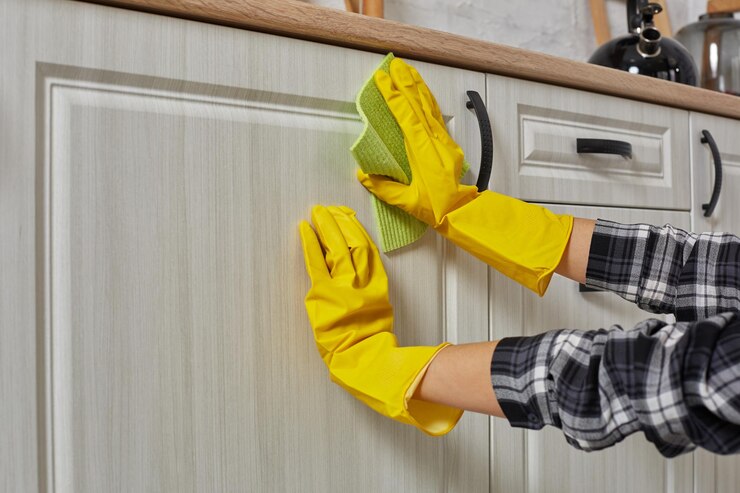
How do you clean each cabinet finish?
Painted cabinets are the most common in new kitchens. In the 2026 U.S. Houzz Kitchen Trends Study, 52% of renovating homeowners chose a painted finish, 18% chose stain and 2% chose laminate. Each finish reacts differently to cleaners, so match the method to the surface.
| Finish | How to clean | Avoid |
|---|---|---|
| Painted | Mild soap and water on a soft cloth, then a dry towel. Wipe gently on edges and corners, where paint is thinnest. | Melamine sponges, scouring pads and strong degreasers, which dull the sheen or wear through the paint |
| Stained wood | Mild soap and water, wiped in the direction of the grain, then dried right away | Dripping cloths, ammonia glass cleaners and silicone sprays that leave a film and make later touch-ups harder |
| Laminate | Mild soap and water. The face tolerates regular cleaning, but the edges need the same care as wood. | Water pooling along the edge banding and abrasive powders that scratch the surface |
Test any new product on the inside of a door first.
What should you never use on kitchen cabinets?
- Abrasive pads and powders. Steel wool, scouring pads and powdered cleansers scratch every finish.
- Bleach and strong solvents. They can discolor paint and soften some clear coats.
- Furniture wax and silicone polish. They build a sticky layer that holds grease and can interfere with future refinishing.
- Too much water or steam. A dripping sponge or a steam cleaner pushes moisture into joints and edges. A damp cloth is enough.
- Wet towels on door fronts. A dish towel hung over the sink door keeps that door damp for hours, every day.
How does Florida humidity affect cabinet care?
Central Florida air carries moisture for most of the year, and cabinets absorb some of it. The EPA recommends keeping indoor humidity below 60 percent, ideally between 30 and 50 percent, to limit mold and moisture problems. Steady air conditioning, a range hood that runs every time you cook and quick repairs of slow leaks do more for cabinets than any cleaning product.
Seasonal homes and vacation rentals that sit closed for weeks need the air conditioning running while they are empty, and a look inside the sink base on every return.
How do you protect cabinets near the sink and dishwasher?
The sink base and the panels beside the dishwasher take the most water and steam in the kitchen. A few habits protect them:
- Let the dishwasher cool before you open it, so the burst of steam does not roll over the countertop edge and the cabinet faces next to it.
- Dry splashes on the sink doors and the toe kick right away.
- Keep a tray or a liner on the floor of the sink base, so a drip shows up before it soaks the cabinet bottom.
- Look under the sink once a month for damp spots, swelling or a musty smell.
If you are choosing new cabinets, our guide to cabinet materials for Florida humidity explains how box and door materials react to moisture.
How do you maintain hinges and drawers?
Hardware needs attention a few times a year. Tighten loose hinge and handle screws with a hand screwdriver, since a power drill can strip the holes. If a door hangs crooked or rubs its neighbor, the adjustment screws on most concealed hinges move it up, down, in or out without taking the door off.
Pull each drawer all the way out, vacuum crumbs from the slides and wipe the tracks with a dry cloth. Skip spray oil, because it collects dust and grit. Soft-close hinges and slides that stop closing gently often need only cleaning or a small adjustment. Our guide on whether soft-close cabinets are worth it explains how they work.
How MJC handles this
At the free 3D design visit, the MJC designer brings door and finish samples in the mobile showroom van and explains how each finish is cleaned and cared for, so upkeep is part of the choice from the start. You see the samples in your own light and can ask which finish suits a busy family kitchen or a home that sits empty for part of the year. The cabinets are then built to measure in our Orlando shop for your space, including the sink wall and the dishwasher run. See what happens at the free design visit.
Frequently asked questions
Can I use vinegar to clean kitchen cabinets?
Diluted vinegar cuts grease, but it is acidic and can dull some painted, lacquered and laminate finishes over time. Mild dish soap in warm water is the safer everyday choice. If you use vinegar, test it inside a door first and rinse afterward.
How do I get grease off cabinets above the stove?
Use warm water with a little more dish soap than usual and hold the cloth on the greasy area for a minute to soften the film. Wipe, rinse with a clean damp cloth and dry. Repeat instead of scrubbing harder, and run the range hood while you cook so the film builds up more slowly.
Why are my cabinet doors swelling near the sink?
Swelling usually means water reached an unsealed edge, from a slow leak, daily splashes or a wet towel hung on the door. Fix the source first. A swollen door rarely returns to its shape, so it may need to be replaced once the leak is solved.
Are disinfecting wipes safe on kitchen cabinets?
Occasional use on handles is usually fine, but many wipes contain alcohol or other chemicals that can dull a finish with daily use. Wipe the area afterward with a cloth dampened in clean water. For routine cleaning, soap and water are gentler.
Plan your project with MJC
Get a free 3D design and see door, finish and granite samples at your home. Cabinets are built to measure in our Orlando shop at 5014 Forsyth Commerce Rd. Complete custom kitchens start at $15,000.